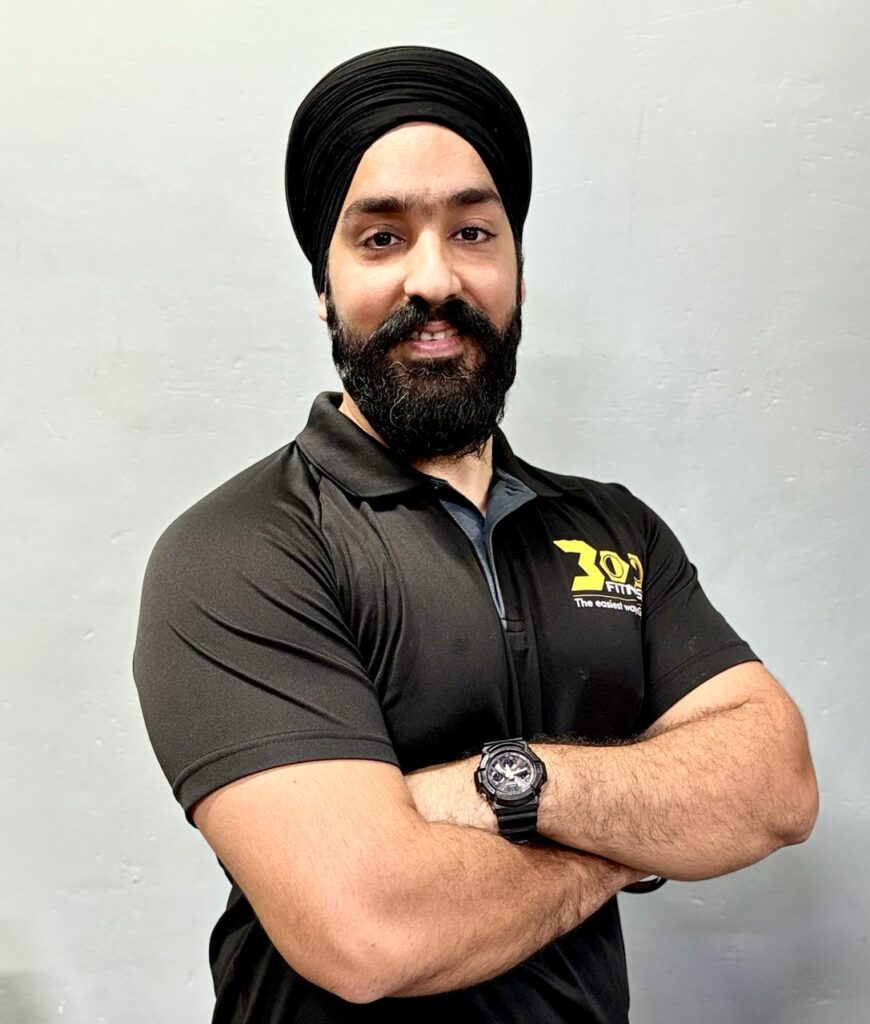
A gym membership with a personal trainer in Gurgaon can be worth paying extra for if you need individual programming, close technique feedback, accountability or regular adjustments to your workouts. It is not essential for everyone. Before buying PT, understand what your normal gym membership already includes, how the trainer will personalise your program and how progress will be reviewed.
The difference between a gym membership and personal training is easy to misunderstand.
You may join a gym where trainers are present on the floor.
That does not necessarily mean every workout is personally coached.
Likewise, a membership may include one or two introductory personal-training sessions without including ongoing one-to-one training.
So before comparing prices, clarify exactly what you are buying.
The better question is not:
“Do I need a trainer?”
It is:
“What problem would a personal trainer solve for me that my regular membership does not?”
Is a personal trainer worth the extra cost?
Personal training makes the most sense when individual attention solves a real problem: you are new to training, unsure about technique, need accountability, want goal-specific programming or struggle to progress alone. If you already train confidently with a structured program, regular gym membership may be enough. Compare the trainer’s coaching process, session structure and progress reviews before paying.
What Is the Difference Between Gym Membership and Personal Training?
A standard gym membership primarily gives you access to the gym and whatever services are included in your specific plan.
Those services can vary.
Depending on the gym and membership tier, they may include:
- equipment access;
- basic floor-trainer guidance;
- a fitness assessment;
- a workout plan;
- group classes;
- nutrition guidance;
- occasional progress reviews.
Personal training is different.
It usually involves dedicated coaching built around you.
That can include:
- individual goal setting;
- exercise selection;
- session planning;
- technique feedback;
- progression;
- accountability;
- regular program adjustments.
The distinction matters because you should not pay twice for support you already receive through your membership.
What Should a Personal Trainer Actually Do?
A personal trainer should provide more than someone standing beside you counting repetitions.
The coaching should have a purpose.
Understand Your Starting Point
Before designing a program, the trainer should understand:
- your experience level;
- current exercise routine;
- training schedule;
- fitness goal;
- preferences;
- relevant limitations that affect training.
For health conditions, injuries or symptoms that require medical assessment, a fitness trainer should not replace an appropriate healthcare professional.
Build a Goal-Specific Program
A muscle-gain program should not look identical to an endurance program.
Likewise, someone training twice per week may need a different structure from someone training five days.
The program should consider:
- training frequency;
- exercise selection;
- volume;
- intensity;
- progression;
- recovery.
Coach Exercise Technique
Useful coaching includes feedback on:
- setup;
- range of motion;
- exercise control;
- appropriate resistance;
- breathing where relevant;
- movement consistency.
Progress the Program
Doing the exact same workout indefinitely is not personalised coaching.
Your trainer should have a reason for:
- increasing resistance;
- changing repetitions;
- adjusting exercise difficulty;
- changing training volume;
- modifying the program.
The latest American College of Sports Medicine resistance-training position stand emphasises individualisation, progressive resistance training and consistent participation rather than unnecessary program complexity.
Read the ACSM resistance-training position stand.
Does Supervised Training Actually Make a Difference?
It can, although the benefit varies by person and training context.
A 2025 randomised trial compared in-person supervised resistance training with app-guided and self-guided programs over ten weeks.
All groups improved several strength measures, but the supervised group had the highest adherence in that particular study and showed greater improvement on some outcomes. The study involved 79 trained adults, so it should not be interpreted as proof that everyone needs a personal trainer.
It does support a practical point:
Good supervision can add value when feedback, adherence and program execution are important.
An earlier randomised study in resistance-trained adults similarly found some advantages for supervised resistance training compared with the same program performed without direct supervision.
Review the supervised resistance-training study.
Personal training is therefore not magic.
Its value comes from better application of the training process.
Who Is Most Likely to Benefit From Personal Training?
Complete Beginners
Walking into a gym for the first time can create a long list of questions:
- Which exercise do I start with?
- How much weight should I use?
- How many repetitions?
- Which machines do I need?
- Am I doing this correctly?
A trainer can reduce that uncertainty.
For many beginners, the early value of PT is not an extreme workout.
It is learning how to train.
People Who Keep Starting and Stopping
If you already know what exercises to perform but repeatedly stop training after two or three weeks, your issue may be consistency rather than information.
Scheduled sessions can create an additional layer of accountability.
People With a Specific Performance Goal
Someone preparing for a strength goal, endurance event or another measurable fitness target may benefit from more deliberate programming and progress tracking.
People Who Are Unsure About Technique
Watching exercise videos is not the same as receiving live feedback on your movement.
A trainer can see things that are difficult to judge yourself.
People Whose Progress Has Stalled
A plateau does not automatically mean you need a trainer.
But an experienced coach may help identify issues such as:
- inconsistent progression;
- poorly distributed training volume;
- exercise selection;
- inadequate recovery;
- unrealistic training frequency.
Busy Gurgaon Professionals
For someone with limited training time, planning every session independently can become another task.
A good trainer can reduce decision-making.
You arrive knowing what the session is for.
This can be particularly useful if you are fitting training around an office schedule in Sector 48, Sector 49 or the Sohna Road area.
Who May Not Need Ongoing Personal Training?
Not everyone needs to pay for PT throughout their gym membership.
You may be comfortable training independently if you:
- understand exercise technique;
- already follow an appropriate program;
- know how to progress it;
- train consistently without external accountability;
- can recognise when the program needs adjustment.
You might still benefit from occasional coaching.
For example, you could use a trainer for:
- initial onboarding;
- technique checks;
- program reviews;
- learning unfamiliar exercises.
This can be more cost-effective than assuming personal training must be permanent.
Not Sure Whether You Need Personal Training?
Visit 300 Fitness in Sector 49, Sohna Road and compare what your membership already includes with the level of one-to-one coaching you actually need.
Gym Membership With Personal Trainer in Gurgaon: What Should You Compare?
Do not compare PT packages only by the number of sessions.
Twenty poorly structured sessions are not automatically better than twelve well-planned ones.
Evaluate the coaching system.
1. Is Gym Membership Included or Separate?
This should be one of your first questions.
Some gyms sell:
membership + personal training
as one combined package.
Others require an active gym membership before you can purchase PT.
300 Fitness currently states that only active gym members are eligible for its personal-training plans.
Its regular membership tiers may also include a limited number of introductory PT sessions depending on the plan.
Review the current 300 Fitness membership and personal-training options.
2. How Many PT Sessions Are Included?
Ask for the exact number.
Then ask:
- How long is each session?
- How frequently should they be used?
- Is there an expiry period?
- What happens if you miss a booked session?
3. Is the Program Personalised?
Ask what will actually change based on your:
- fitness level;
- schedule;
- goal;
- experience;
- progress.
Adding your name to a standard workout sheet is not meaningful personalisation.
4. Will Progress Be Reviewed?
Your trainer should have some method of deciding whether the program is working.
Progress may involve:
- strength;
- repetitions;
- exercise technique;
- workout consistency;
- endurance;
- other goal-relevant measures.
5. Will the Same Trainer Coach You?
There is nothing inherently wrong with a team-based coaching system.
You simply need to understand the model before paying.
Continuity can be useful because the coach becomes familiar with:
- your exercise history;
- previous sessions;
- technical issues;
- progression.
6. What Happens Outside the PT Session?
A useful question is:
What should I do on the days I train without my personal trainer?
If you purchase two or three supervised sessions per week but also train independently, you still need a plan for those additional sessions.
What Does Personal Training at 300 Fitness Currently Look Like?
The official 300 Fitness Services page separates general membership from ongoing personal-training programs.
It currently describes personal training around:
- goal setting and tracking;
- exercise guidance;
- accountability;
- customised workout plans;
- adaptable training;
- flexible scheduling.
The site lists several personal-training program structures, including:
- Foundation Builder Program: 12 sessions to be consumed across 4 weeks;
- Strength Accelerator Program: 24 sessions across 8 weeks;
- Total Transformation Program: 36 sessions across 12 weeks;
- Elite Athlete Program: 72 sessions across 24 weeks.
These are current published program structures, not recommendations that every member needs the longest package.
You can check the latest details on the 300 Fitness Services page.
The right level of coaching should depend on the individual.
Personal Training vs Workout Card: Which Do You Need?
This is an important distinction.
You may need a personalised program without needing a trainer beside you every session.
A Workout Card May Be Enough If
You:
- can exercise independently;
- understand most basic movements;
- mainly need structure;
- are reasonably consistent;
- can follow progression instructions.
300 Fitness describes its Workout Cards as personalised structured plans based on fitness level, goals and preferences, with exercise instructions and progression guidance.
Personal Training May Be Better If
You need:
- regular live feedback;
- close supervision;
- accountability;
- frequent program adjustments;
- help learning exercises;
- coaching throughout the session.
Neither option is universally superior.
They solve different problems.
Personal Trainer vs Floor Trainer
These terms are often confused.
Floor-Trainer Support
This generally refers to trainers available around the gym to help members with basic equipment use or exercise questions.
The level of support varies between gyms.
Personal Trainer
A personal trainer is allocated specifically to your coaching sessions.
That usually involves a more individual process around:
- your program;
- technique;
- progression;
- session delivery.
Before paying for PT, understand what floor support you already receive.
Is Personal Training Worth the Extra Money?
Use this decision framework.
Personal Training Decision Guide
Start with the problem you want coaching to solve, then decide whether the additional cost is justified.
| Your Situation | PT Value | What to Consider |
|---|---|---|
| Completely new to the gym | Potentially High | Technique, equipment confidence and program structure |
| Know exercises but lack consistency | Potentially High | Accountability and scheduled sessions |
| Specific strength or performance goal | Potentially High | Programming, progression and feedback |
| Confident intermediate trainee | Depends | Occasional program review may be sufficient |
| Already progress well independently | Potentially Lower | Structured membership or workout plan may be enough |
| Need medical rehabilitation | Needs Separate Evaluation | Seek appropriately qualified healthcare guidance rather than assuming standard PT is rehabilitation |
How Much Personal Training Should You Buy?
More sessions are not automatically better.
Consider your objective.
Short Initial Coaching Block
This can work if you mainly need:
- gym orientation;
- exercise technique;
- a starting program;
- confidence.
Several Weeks of Personal Training
This may suit someone who needs:
- routine building;
- ongoing technique coaching;
- progressive programming;
- stronger accountability.
Longer Coaching Relationship
This may make sense for a more demanding performance goal or for someone who strongly prefers coached training.
But do not commit to a large PT package before answering:
Do I work well with this trainer?
Coaching style matters.
One trainer may be technically knowledgeable but communicate in a way that does not suit you.
Another may be highly motivating but not provide enough program structure.
Try to evaluate both.
Questions to Ask a Personal Trainer Before You Pay
Ask these directly.
- How will you assess my starting point?
- How will you build my program?
- What will change based on my goal?
- How often will we train together?
- What should I do on non-PT days?
- How will you track progress?
- When will you update the program?
- What happens if I miss a session?
- How long are sessions valid?
- Is gym membership separate?
- Will the same trainer coach me?
- What support is available between sessions?
Good coaching should become clearer as you ask questions, not more confusing.
Do You Need a Personal Trainer for Weight Loss?
Not necessarily.
A trainer cannot guarantee fat loss.
Body-weight and body-composition changes are influenced by factors including training, nutrition, activity, recovery and adherence.
A personal trainer may still help by:
- structuring resistance training;
- adding appropriate conditioning;
- improving exercise technique;
- helping you progress;
- supporting consistency.
Nutrition needs to be addressed appropriately as part of the broader plan.
Do You Need a Personal Trainer for Muscle Gain?
Again, not automatically.
Muscle gain requires consistent resistance training, appropriate progression, sufficient recovery and appropriate nutrition.
A trainer may be useful if you struggle with:
- technique;
- program design;
- progressive overload;
- exercise selection;
- consistency.
Someone experienced in resistance training may be perfectly capable of following a structured program independently.
Should Beginners Buy PT Immediately?
Do not buy PT simply because you are told all beginners need it.
Instead, evaluate what the regular membership already provides.
At 300 Fitness, for example, the current membership structure includes Workout Cards across the standard membership plans and limited introductory PT sessions in some longer-duration memberships.
This can help a beginner evaluate whether additional ongoing coaching is necessary.
The correct sequence is:
Understand your membership support first → identify the remaining gap → decide whether PT solves it.
Location Still Matters Even With a Great Trainer
A fantastic personal trainer cannot help much if reaching the gym becomes impractical.
For Gurgaon members around Sector 49, Sohna Road, Sector 48, South City 2 or Vatika City, evaluate:
- home-to-gym route;
- office-to-gym route;
- PT session timings;
- traffic during booked sessions.
Personal training introduces scheduled appointments.
That makes location compatibility even more important.
Missing independent gym sessions is one thing.
Repeatedly missing prepaid PT sessions is more expensive.
How to Judge PT Value After the First Few Weeks
Do not judge only by soreness or exhaustion.
Instead, ask:
Do I Understand My Program Better?
You should gradually understand why exercises are being selected.
Is My Technique Improving?
You should be receiving specific feedback rather than generic encouragement.
Is Training Progressing?
Your program should respond to your development.
Am I More Consistent?
If accountability was your main reason for hiring a trainer, attendance matters.
Am I Becoming More Capable?
Good coaching should not make you permanently dependent on being told every movement.
Over time, you should understand more about your own training.
The Best Personal Trainer Is Not Necessarily the Hardest Trainer
An exhausting session is easy to create.
A productive program is harder.
Do not judge coaching quality based on:
- how much you sweat;
- how sore you are;
- how many exercises fit into one hour.
Look instead for:
- appropriate exercise selection;
- clear technique feedback;
- progressive training;
- sensible recovery;
- communication;
- consistency.
Training should challenge you appropriately, not simply punish you.
How 300 Fitness Approaches Personal Training
300 Fitness currently positions personal training as a service available to active gym members.
Its published PT approach includes goal tracking, exercise guidance, customised workouts, accountability and adaptability.
The gym also offers structured Workout Cards for members who may not require continuous one-to-one supervision.
That creates a useful distinction:
Some members need a better plan. Others need a coach managing the plan with them.
You can explore the 300 Fitness approach, review the current membership and PT programs or use the Fit School for additional fitness education.
Choose Personal Training for a Reason, Not Just Because It Is Offered
Visit 300 Fitness in Sector 49, Sohna Road to understand the current membership support, Workout Cards and personal-training options, then choose the level of coaching that fits your goal.
Talk to a TrainerFrequently Asked Questions
Is a gym membership with a personal trainer worth it?
It can be worth it when you need individual programming, technique feedback, accountability or frequent workout adjustments. If you already train confidently and progress independently, a structured gym membership may be sufficient.
Is personal training included with gym membership?
It depends on the gym and membership plan. Some plans include introductory PT sessions, while ongoing one-to-one personal training is usually a separate service. Always confirm the exact inclusion before paying.
How is a personal trainer different from a gym floor trainer?
A floor trainer generally provides basic support to members using the gym. A personal trainer usually provides scheduled one-to-one coaching, personalised programming, technique feedback and progress tracking.
Should a beginner get a personal trainer?
A beginner can benefit from personal training if they need help learning technique, using equipment and following a structured program. However, not every beginner requires ongoing PT if sufficient onboarding and workout guidance are already available.
How many personal-training sessions do I need?
There is no universal number. Someone who only needs exercise instruction may need a shorter coaching block, while someone wanting ongoing accountability or goal-specific programming may benefit from longer coaching.
Can personal training help with muscle gain?
A trainer can help structure resistance training, coach technique and manage progression. Muscle gain still depends on consistent training, nutrition, recovery and individual response, so it should not be guaranteed by a trainer.
Can personal training guarantee weight loss?
No. A trainer should not guarantee weight loss. Personal training can support structured exercise and consistency, while body-weight change also depends on nutrition, activity, recovery and other individual factors.
Should I buy personal training before trying the gym?
It is usually sensible to first understand the gym, membership inclusions and coaching style. If possible, meet the trainer and understand how sessions work before committing to a large package.
Does 300 Fitness offer personal training in Gurgaon?
Yes. The current 300 Fitness Services page lists several personal-training programs for active gym members, along with regular membership options and personalised Workout Cards.
Where is 300 Fitness located?
300 Fitness is located at UG Floor, B Block, Omaxe Gurgaon Mall, Gurugram, Haryana 122018, in the Sector 49 and Sohna Road area.