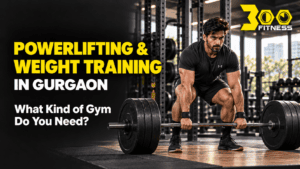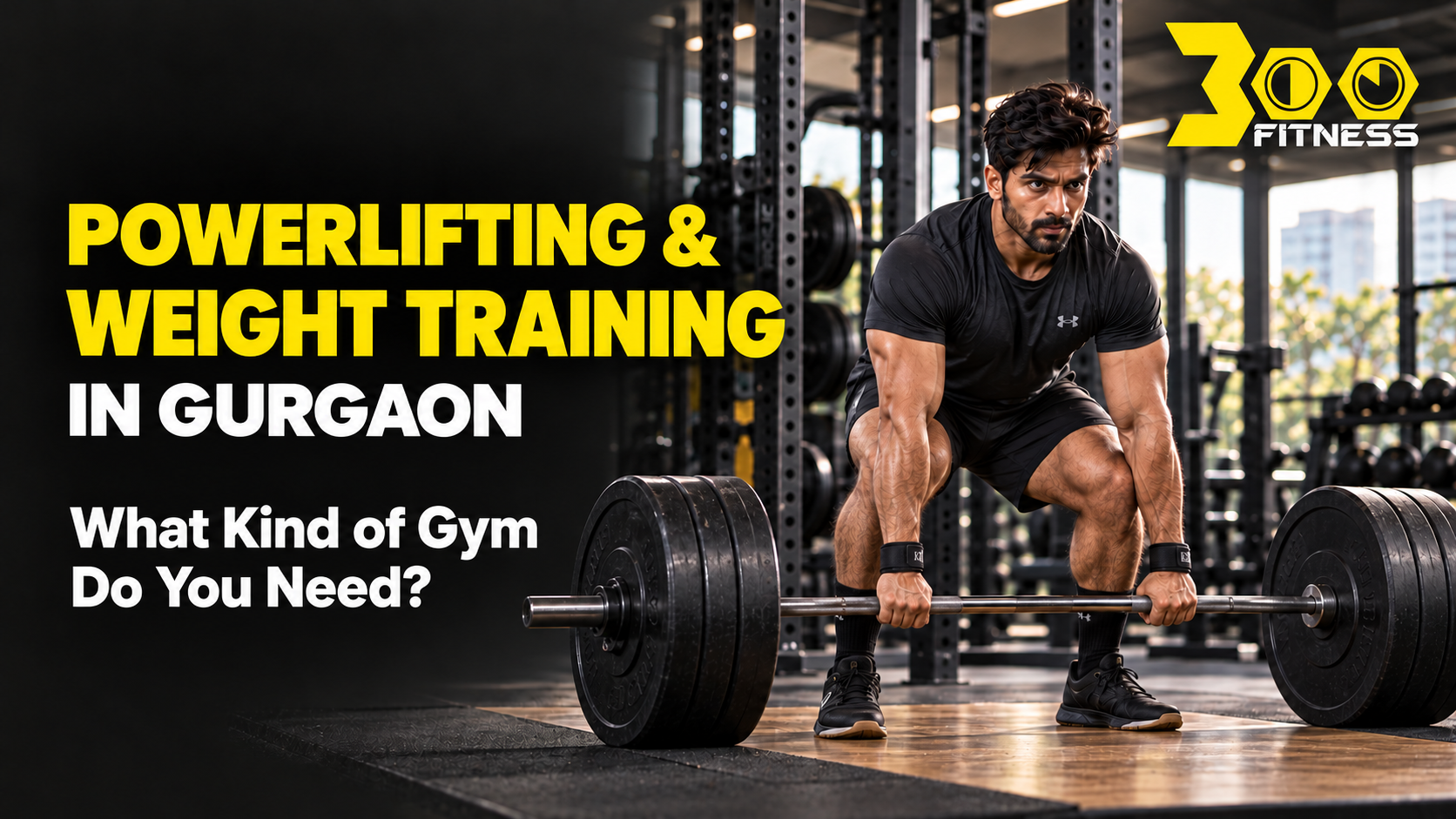
You do not need a specialist powerlifting gym simply because you want to get stronger. General weight training can be done effectively in a well-equipped gym with suitable resistance equipment and structured progression. A specialist powerlifting setup becomes more important when your goal specifically revolves around improving or competing in the squat, bench press and deadlift under powerlifting-style standards.
Search for powerlifting in Gurgaon, and you will often see the term mixed with:
- strength training;
- bodybuilding;
- weight training;
- functional training;
- Olympic weightlifting.
These are related forms of resistance training, but they are not the same thing.
That distinction matters before you choose a gym.
If your goal is simply:
“I want to become stronger and build muscle,”
you probably have many more gym options than someone preparing specifically for a powerlifting competition.
If your goal is:
“I want to improve my squat, bench press and deadlift total,”
equipment, coaching and programming requirements become more specific.
Do You Need a Powerlifting Gym or a Normal Gym?
Choose a well-equipped general gym if your goal is strength, muscle gain or general weight training. Look for suitable resistance equipment, progressive workout planning and coaching. Look for a more specialised powerlifting setup when squat, bench press and deadlift performance are your primary goals, especially if you plan to compete and need practice with competition-style equipment and standards.
What Is Powerlifting?
Powerlifting is a strength sport based around three competition lifts:
- Squat
- Bench Press
- Deadlift
The International Powerlifting Federation recognises these three lifts, performed in that order, with the best successful attempt from each contributing to the lifter’s total.
That means powerlifting training has a very specific objective.
You are not simply trying to “get fit.”
You are trying to improve performance in those lifts and, for competitive lifters, perform them according to competition rules.
What Is Weight Training?
Weight training is much broader.
It simply describes resistance exercise performed using external resistance such as:
- barbells;
- dumbbells;
- machines;
- cables;
- other weighted equipment.
Weight training can be used for:
- strength;
- muscle gain;
- general fitness;
- sports performance;
- muscular endurance;
- physical function.
Powerlifting therefore sits inside the larger world of resistance and weight training.
All powerlifters perform weight training.
Not everyone performing weight training is a powerlifter.
Powerlifting vs General Weight Training
Powerlifting vs Weight Training at a Glance
The correct gym depends on what you actually want your training to improve.
| Factor | Powerlifting | General Weight Training |
|---|---|---|
| Main Goal | Improve squat, bench press, deadlift and total | Strength, muscle gain, fitness or other goals |
| Exercise Selection | Centred around the three competition lifts plus assistance work | Can use a much broader range of exercises |
| Equipment | Barbell, rack, bench, plates and suitable lifting setup become especially important | Can use machines, free weights, cables and other resistance options |
| Technique | Competition-style technique may matter | Technique is goal and exercise specific |
| Programming | Specificity towards squat, bench and deadlift | Can be programmed for many different adaptations |
| Competition Rules | Relevant for competitive lifters | Usually irrelevant |
Do You Need a Specialist Powerlifting Gym?
Not if your main objective is simply getting stronger.
A good general gym may provide everything you need for years of productive resistance training.
A General Gym May Be Enough If You Want To
- build overall strength;
- gain muscle;
- improve general fitness;
- learn resistance training;
- become stronger without competing;
- combine strength with cardio or classes.
A More Specialised Powerlifting Setup Matters When
You specifically want to:
- improve the squat, bench press and deadlift;
- train heavily in those movements;
- practise competition-style technique;
- prepare for a powerlifting meet;
- work with a coach experienced in powerlifting.
The more specific the goal becomes, the more specific your training environment may need to become.
What Equipment Does a Powerlifter Need?
A serious powerlifting program becomes difficult without reliable access to the basic competition movement setup.
Squat Rack
You need an appropriate rack that allows you to set up and perform barbell squats safely.
Bench
For competitive preparation, bench setup and dimensions can become increasingly relevant.
Barbell
A suitable barbell is central to all three lifts.
Plates
Progressive training requires enough available loading.
Deadlift Area
You need an appropriate place to perform heavy deadlifts without constantly modifying the program because the movement is not permitted or practical.
Safety Equipment
Appropriate safety arms, spotter support or rack setup can matter depending on the exercise and training load.
The IPF’s current technical rules include detailed specifications for competition platforms, bars, discs, racks and benches, which shows how specific competition equipment becomes at the sport level.
A beginner who simply wants to get stronger does not need a competition-certified setup.
A competitive lifter may value greater specificity.
Does a Strength Gym Need Hundreds of Machines?
No.
Equipment variety can help, but strength development does not depend on collecting every possible machine.
The 2026 ACSM position stand reviewed 137 systematic reviews involving more than 30,000 participants. It concluded that progressive resistance training improves strength, muscle size, power, endurance and physical function. Equipment type itself did not consistently determine training outcomes across the evidence reviewed.
That is useful when choosing a gym.
Do not ask only:
“How many machines are here?”
Ask:
“Can I perform and progress the exercises my program actually requires?”
Progressive Overload Matters More Than Looking Hardcore
Black walls, bumper plates and loud music do not create strength.
Progressive training does.
For strength development, your program needs a method for increasing the training challenge over time.
That can include:
- increasing resistance;
- increasing repetitions;
- adding useful training volume;
- improving technique;
- progressing exercise difficulty.
The current ACSM guidance supports progressive resistance training and reports that heavier loads, complete range of motion, appropriate set volume and regular weekly training can be useful when maximal strength is the main objective.
Progression Is Not the Same as Testing Your Maximum Every Week
You do not need to attempt a one-repetition maximum every session.
Training and testing are different.
Most productive strength work happens through repeated training sessions that build towards stronger performance.
What Should Beginners Do?
Beginners do not need to start with specialist powerlifting programming unless powerlifting is already their specific interest.
They first need to learn:
- basic exercise technique;
- appropriate resistance selection;
- how sets and repetitions work;
- how to follow a program;
- how progression works;
- how to recover between workouts.
Start With the Goal
If you say:
“I want to become stronger,”
a broad resistance-training plan may be ideal.
If you say:
“I want to learn powerlifting,”
your program can begin introducing the squat, bench press and deadlift more deliberately.
Neither person needs to train like an advanced competitor on day one.
Want to Start Structured Weight Training?
Visit 300 Fitness in Sector 49, Sohna Road and explore the current strength-training environment, personalised Workout Cards and trainer guidance available for your goal.
Powerlifting vs Bodybuilding
These are commonly confused.
Powerlifting
Performance is judged on strength in:
- squat;
- bench press;
- deadlift.
Bodybuilding
Training primarily aims to develop muscular size, proportion and appearance.
A bodybuilder may use squats.
A powerlifter may perform bodybuilding-style accessory exercises.
But their primary outcomes differ.
Can You Train for Both?
Yes.
Many recreational lifters combine:
- strength-focused compound lifts;
- higher-volume accessory work for muscle development.
You do not have to compete in either sport to benefit from this type of mixed training.
Powerlifting vs Olympic Weightlifting
These are completely different competitive sports.
Powerlifting involves:
- squat;
- bench press;
- deadlift.
Olympic-style weightlifting centres on different competition lifts.
Do not assume a “weightlifting gym” automatically provides specialist powerlifting coaching.
Ask specifically what kind of lifting the coach or program focuses on.
How Important Is Coaching for Powerlifting?
The more technical and competitive your goal becomes, the more valuable specialised coaching can become.
A coach may help with:
- squat technique;
- bench setup;
- deadlift technique;
- programming;
- attempt selection;
- fatigue management;
- meet preparation;
- competition rules.
General Strength Coaching Is Not Always Powerlifting Coaching
A good personal trainer may be excellent at helping members improve general strength.
That does not automatically mean they specialise in competition powerlifting.
If competition is your goal, ask directly about relevant coaching experience.
Can You Get Strong Using Machines?
Yes.
Strength is specific to what you train, but machine-based resistance training can still improve muscular strength and size.
The ACSM’s 2026 review found that equipment type did not consistently determine resistance-training outcomes.
Machines can be useful for:
- beginners;
- accessory work;
- muscle development;
- adding training volume;
- exercises where you want greater stability.
But Powerlifting Requires Barbell Specificity
If you want to improve a barbell squat for competition, eventually you need to practise the barbell squat.
The same applies to competition bench press and deadlift.
Specific goals require specific practice.
What Should You Look for in a Weight Training Gym?
Weight Training Gym Checklist
Choose according to your training goal rather than the visual style of the gym.
| Factor | General Strength Training | Powerlifting Focus |
|---|---|---|
| Resistance Equipment | Broad machine and free-weight selection can work well | Barbell-focused setup becomes more important |
| Squat Setup | Useful | Essential |
| Bench Setup | Useful for pressing | Central to training |
| Deadlift Space | Depends on program | Essential |
| Machines | Can form a significant part of training | Useful mainly as assistance alongside the competition lifts |
| Coaching | General resistance-training knowledge may be enough | Powerlifting-specific knowledge becomes increasingly valuable |
| Competition Rules | Not relevant | Important for competitive lifters |
| Progress Tracking | Strength, reps, muscle gain or other goal-specific metrics | Squat, bench, deadlift and overall total are major performance indicators |
Check the Gym at the Time You Plan to Lift
Equipment existing in the building is not enough.
You need to be able to use it.
If you train after office, visit during your normal training time.
Check whether:
- racks are constantly occupied;
- benches are accessible;
- free weights are easy to use;
- you can complete your program without excessive waiting.
This matters especially for strength training because some exercises cannot be replaced easily without changing the program.
How Much Strength Equipment Do You Really Need?
Probably less than social media makes it appear.
A productive program could be built using a relatively small collection of resistance-training tools if they allow appropriate progression.
You do not need every new machine on the market.
You need:
- exercises that fit the goal;
- appropriate resistance;
- progression;
- consistency.
That principle applies whether you are a beginner or an experienced lifter.
How Should You Track Progress?
For general weight training, useful measures may include:
- resistance used;
- repetitions;
- sets;
- exercise technique;
- training consistency.
For powerlifting, you may focus more heavily on:
- squat performance;
- bench press performance;
- deadlift performance;
- estimated or tested maximum strength;
- competition total if you compete.
Do not judge strength progress only by body weight or appearance.
Performance has its own metrics.
Should You Train to Failure?
Not every set needs to end in complete muscular failure.
The current ACSM evidence review found that training to momentary muscle fatigue did not consistently improve outcomes compared with other approaches.
That does not mean hard sets are unnecessary.
It means you do not need to turn every workout into a maximum-effort test.
Programming should manage both stimulus and recovery.
How Often Should You Strength Train?
There is no single frequency for everyone.
It depends on:
- goal;
- training experience;
- program volume;
- recovery;
- schedule.
The current ACSM review found that strength benefits were associated with regular progressive resistance training and that training major strength work at least twice weekly can be effective for healthy adults.
A powerlifting program may use a different frequency depending on how the competition lifts and accessory work are organised.
Is Powerlifting Safe for Beginners?
Beginners can learn powerlifting movements, but they should not treat beginner training as constant maximal lifting.
Start with:
- technique;
- manageable resistance;
- gradual progression;
- appropriate coaching where needed.
If you have an injury, medical condition or symptoms that affect training, seek appropriate clinical guidance rather than assuming a gym coach replaces a healthcare professional.
How 300 Fitness Fits This Search
300 Fitness should not automatically be described as a specialist powerlifting gym unless that specialist service is specifically confirmed.
Its verified positioning is broader.
The brand currently focuses on:
- structured fitness;
- strength training;
- personalised Workout Cards;
- trainer support;
- personal training;
- group workouts;
- fitness assessments;
- progress reviews.
For someone searching for weight training in Gurgaon, these can be relevant features.
For someone preparing specifically for competitive powerlifting, additional questions should be asked during the visit:
- Is the required barbell equipment available?
- Can squat, bench press and deadlift be trained as required?
- Is heavy strength training practical during my workout hours?
- Is powerlifting-specific coaching available?
- Can competition-style technique be practised?
Do not assume the answer.
Ask before taking a membership.
Questions to Ask Before Joining
Ask these if strength is your main goal:
- Can I squat, bench press and deadlift here?
- Is there enough resistance available for progression?
- How busy are the racks during my training time?
- Can trainers help with resistance-training technique?
- Will I receive a structured workout plan?
- How will my strength progression be tracked?
- Is personal training available if I want closer coaching?
- Can my program change as I get stronger?
- Are there restrictions on heavy lifting?
- If I want to compete, is specialist powerlifting coaching available?
These questions tell you much more than:
“Is this a hardcore gym?”
Final Takeaway
You do not need to identify as a powerlifter to lift weights.
And you do not need a specialist powerlifting facility to become stronger.
Choose a regular weight training gym when your goal is:
- strength;
- muscle gain;
- general fitness;
- progressive resistance training.
Look for more specialised powerlifting training when your goal centres specifically around:
- squat;
- bench press;
- deadlift;
- competition performance.
Start with the goal.
Then choose the gym.
Want to Start Weight Training With a Clear Plan?
Visit 300 Fitness in Sector 49, Sohna Road and evaluate the strength-training setup, personalised Workout Cards, trainer support and membership options according to your goal.
Visit 300 FitnessFrequently Asked Questions
What is powerlifting?
Powerlifting is a strength sport based on three competition lifts: squat, bench press and deadlift. The best successful lift in each contributes to the athlete’s total.
Is powerlifting the same as weight training?
No. Powerlifting is a specific strength sport. Weight training is a broader term covering resistance exercise used for strength, muscle gain, fitness and other goals.
Do I need a powerlifting gym to get stronger?
No. A well-equipped general gym can be suitable for strength development if it provides appropriate resistance equipment and allows progressive training.
What equipment do I need for powerlifting?
Powerlifting training centres on suitable equipment for the squat, bench press and deadlift, including a barbell, plates, rack, bench and appropriate lifting space.
Is powerlifting good for beginners?
Beginners can learn powerlifting movements, but training should begin with technique, appropriate resistance and gradual progression rather than constant maximal lifting.
Is powerlifting the same as bodybuilding?
No. Powerlifting primarily measures strength in squat, bench press and deadlift. Bodybuilding primarily focuses on muscular development and appearance.
Is powerlifting the same as Olympic weightlifting?
No. They are different competitive sports with different lifts, rules and training requirements.
Can machines make you stronger?
Yes. Machine-based resistance training can improve strength and muscle size. If your goal is powerlifting, however, you also need specific practice in the competition lifts.
Should I train to failure for strength?
Not every set needs to reach momentary failure. Current ACSM evidence does not show that training to failure consistently produces superior resistance-training outcomes.
Is 300 Fitness a powerlifting gym in Gurgaon?
300 Fitness should not automatically be described as a specialist powerlifting facility. Its verified offering is broader and includes strength training, personalised workouts, trainer guidance and personal training. Competitive powerlifters should confirm the required equipment and specialist coaching directly before joining.