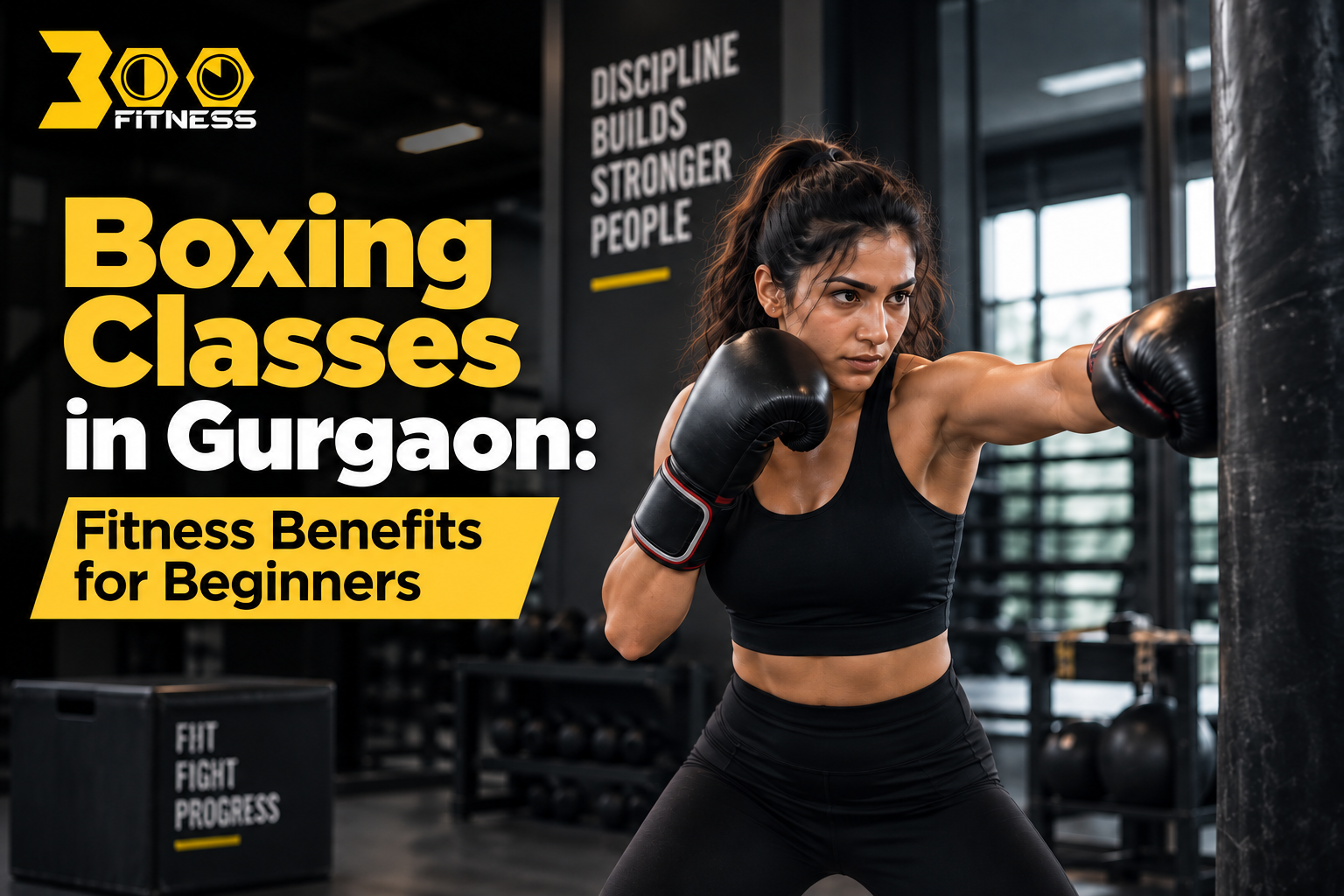
Beginner boxing fitness usually starts with stance, guard, footwork, basic punches and simple combinations before adding bag work, pad drills and conditioning. You do not need previous boxing experience, and fitness-focused boxing does not have to involve sparring or being hit.
That distinction matters if you are searching for boxing classes in Gurgaon mainly to improve fitness rather than prepare for competition.
Boxing can add cardiovascular work, coordination, movement, technique and a skill element that traditional cardio does not always provide. It can also sit alongside regular strength training instead of replacing it.
For someone around Sector 49, Sohna Road, Malibu Towne or Rosewood City, the right beginner class should make the basics easier to learn and increase difficulty gradually rather than throwing a new participant straight into advanced drills.
>Is boxing fitness suitable for beginners?
Yes. Beginners can start with stance, footwork, shadowboxing, basic punches and simple combinations before progressing to pads, bags and harder conditioning. Fitness boxing can be completely non-contact, so sparring is not required for someone whose goal is exercise. A good beginner program should prioritise technique, manageable intensity and gradual progression.
A beginner boxing session should teach before it exhausts you.
Current Gurgaon boxing programs ranking for beginner searches commonly describe first sessions around:
- warm-up;
- stance and guard;
- basic punches;
- footwork;
- shadowboxing;
- bag or pad drills;
- conditioning.
That structure makes sense because boxing becomes difficult to learn if every drill is performed while completely exhausted.
A first class might begin with easy movement and a short warm-up, followed by learning how to stand and move.
Then come the basic punches.
After that, you may practise those punches without contact through shadowboxing, on focus pads or against a bag.
Conditioning can be added later in the session.
The exact format varies between gyms and coaches, but a beginner should understand what they are doing and why.
A technically simple session repeated well is more useful than twenty combinations you cannot remember.
Stance, Footwork and Basic Combinations
Boxing starts from the ground.
Before trying to punch faster, learn how to stand.
Boxing Stance
A basic stance helps you remain balanced enough to move and punch.
The exact setup depends on whether you use an orthodox or southpaw stance, but beginners usually learn:
- a staggered foot position;
- balanced weight distribution;
- knees that are not completely locked;
- hands positioned to protect the face;
- a controlled upper body position.
The purpose is not to stand perfectly still.
Your stance needs to allow movement.
Footwork
Boxing footwork teaches you to move while trying to maintain balance and position.
Beginner drills may include:
- stepping forward;
- stepping backward;
- lateral movement;
- simple pivots;
- combining movement with punches.
This is one reason boxing feels different from ordinary machine cardio.
Your arms and legs have to coordinate while you continuously adjust position.
Basic Punches
Most beginners start with a small set of fundamental punches such as:
- jab;
- cross;
- hook;
- uppercut.
You may then learn basic combinations such as:
Jab, cross
or:
Jab, cross, hook
The combination itself is not the main achievement.
The useful part is learning to coordinate:
- feet;
- hips;
- trunk;
- shoulders;
- arms;
- breathing.
Start slowly enough to understand the movement before trying to make it fast.
Shadowboxing, Pads and Bag Work
These three drills may look similar from outside, but they serve different purposes.
Shadowboxing
Shadowboxing means practising boxing movements without striking another person or object.
It can help you work on:
- stance;
- footwork;
- combinations;
- movement rhythm;
- technique.
For beginners, it removes the distraction of impact.
You can concentrate on the movement itself.
Focus Pad Training
A coach or training partner may hold pads as targets.
Pad drills can help develop:
- timing;
- accuracy;
- combinations;
- movement;
- responsiveness.
Instruction matters here because the goal should be more than hitting the pads as hard as possible.
Heavy Bag Training
A heavy bag allows you to practise punches against resistance.
It can turn combinations into demanding conditioning rounds, especially when footwork and repeated punch sequences are added.
Beginners should still focus on proper punching mechanics before trying to hit at maximum power.
Boxing for Cardio and Coordination
Boxing can be demanding cardiovascular exercise because rounds often combine repeated movement, punches and short recovery periods.
A systematic review of Olympic combat sport interventions in non-athletes found improvements in cardiorespiratory fitness, although the authors rated the certainty of evidence from moderate to low and included combat sports beyond boxing alone.
Review the combat sports cardiorespiratory fitness study on PubMed
Research on amateur boxing also shows that boxing competition and training place meaningful demands on cardiorespiratory fitness. That research concerns trained boxers, so it should not be used to predict exactly what a beginner fitness class will do, but it helps explain why boxing conditioning can feel demanding.
Coordination is another reason many people enjoy boxing.
On a treadmill, the main task is repetitive locomotion.
During boxing, you may need to:
- move your feet;
- maintain your stance;
- remember a combination;
- rotate your body;
- find the target;
- return to guard;
- react to the next instruction.
That makes the workout mentally engaging as well as physical.
Boxing vs Traditional Cardio
Boxing fitness and traditional cardio can both improve your weekly activity.
The experience is different.
| Factor | Boxing Fitness | Traditional Cardio |
| Movement | Multi-directional | Usually repetitive |
| Skill element | High | Usually low |
| Coordination | Significant | Generally simpler |
| Intensity control | Depends on drills and rounds | Easy to control with speed or resistance |
| Learning curve | Higher | Lower |
| Social / coaching element | Often strong | Optional |
| Progress can involve | Technique, rounds, combinations, conditioning | Speed, distance, time, incline, resistance |
| Good fit for | People who enjoy skill-based cardio | People who prefer simple measurable cardio |
Boxing May Suit You If
You:
- get bored with repetitive cardio;
- enjoy learning a skill;
- like coached workouts;
- want more coordination;
- enjoy interval-style training;
- prefer variety.
Traditional Cardio May Suit You If
You:
- want exact control over intensity;
- prefer a simpler workout;
- want to train independently;
- need an easy recovery session;
- do not enjoy boxing drills.
There is no need to pick only one.
Walking, cycling or treadmill work can still fit around boxing classes.
Interested in Adding Skill-Based Conditioning to Your Routine?
Visit 300 Fitness in Sector 49, Sohna Road and ask the team about current combat-fitness and structured training options for your fitness level.
Boxing Fitness Is Not the Same as Sparring
This is one of the most important things for a beginner to understand.
You can use boxing for fitness without sparring.
Fitness boxing can include:
- shadowboxing;
- pads;
- heavy bags;
- footwork;
- technique drills;
- conditioning.
None of these requires another person to punch you.
What Is Sparring?
Sparring involves practising boxing against another participant who can attack and defend.
Depending on the training environment and experience level, it may be controlled at different intensities.
That introduces a different risk profile.
A systematic review of amateur boxing injuries found that head and neck injuries were the most common competition injury region, while upper-limb injuries were common during training.
That is why beginners should not assume sparring is simply the next part of a fitness class.
If a gym offers it, ask:
- Is sparring optional?
- What experience is required first?
- How is intensity controlled?
- What protective equipment is required?
- Who supervises it?
For a person whose only goal is cardio and fitness, sparring may not be necessary at all.
Equipment Beginners May Need
Do not buy an entire boxing kit before you attend your first class.
Requirements vary between facilities.
A beginner may eventually use:
- boxing gloves;
- hand wraps;
- comfortable training clothes;
- suitable training shoes;
- water bottle.
Do You Need Your Own Gloves Immediately?
Not always.
Some facilities have gloves for introductory sessions, while others require participants to bring or buy their own.
Ask before your first class.
If you decide to continue boxing regularly, personal gloves can make sense for fit and hygiene.
What Do Hand Wraps Do?
Hand wraps are worn inside boxing gloves and are commonly used to support the hands and wrists.
Wrapping technique matters too.
Ask the coach how they want beginners to wrap their hands rather than copying a random method without context.
Do You Need Headgear?
Not for normal shadowboxing, bag work or most non-contact fitness drills.
Protective equipment requirements become more relevant if training progresses towards partner contact or sparring.
Headgear should also not be treated as permission to absorb head impacts. A position statement from the Association of Ringside Physicians notes that headguards can reduce facial lacerations but should not be relied upon to prevent concussion or traumatic brain injury.
Read the Association of Ringside Physicians headguard statement
Boxing Fitness vs Sparring: Beginner Guide
Know What Type of Boxing Training You Are Joining
Fitness boxing and competitive boxing can share techniques, but they do not need to share the same level of contact.
Safety and Progression for New Participants
A beginner boxing program should progress in layers.
Step 1: Learn the Stance
Get comfortable standing, guarding and moving.
Step 2: Learn Individual Punches
Practise the basic punch mechanics slowly enough to stay balanced.
Step 3: Build Simple Combinations
Combine two or three punches before adding complicated sequences.
Step 4: Add Movement
Practise combinations while stepping and changing position.
Step 5: Add Bags or Pads
Introduce targets without making power the main objective.
Step 6: Increase Conditioning
Use timed rounds and shorter rest periods as fitness improves.
This progression is far more sensible than increasing every variable at once.
If the punches are faster, rounds are longer, rest is shorter and combinations become harder all in the same week, it becomes difficult to identify what is actually improving.
The [300 Fitness Workout Analysis] concept also emphasises balancing training challenge with adequate recovery rather than assuming more intensity automatically produces better progress. 300 Fitness Workout Analysis
Can Boxing and Strength Training Work Together?
Yes.
They can complement one another well.
Boxing training places large demands on movement, coordination and conditioning.
Strength training provides a more direct way to progressively load muscles.
A weekly routine could look like this:
| Day | Training |
| Monday | Strength Training |
| Tuesday | Boxing Fitness |
| Wednesday | Walking or Recovery |
| Thursday | Strength Training |
| Friday | Boxing Fitness |
| Saturday | Optional Strength, Cardio or Mobility |
| Sunday | Recovery |
This is an example, not a prescription.
If boxing sessions are very demanding, you may need more recovery.
If they are mainly technical, combining them with other training may be easier.
The goal is to build a week where the sessions support each other.
Is Boxing Good for Weight Loss?
Boxing fitness can contribute to a weight management program because it can add meaningful physical activity and energy expenditure.
It is not a guaranteed fat-loss method.
Food intake, total weekly activity, strength training, everyday movement and consistency still matter.
Someone who enjoys boxing may find it easier to perform cardio regularly than someone forcing themselves onto a treadmill they dislike.
That adherence benefit can be practically important.
But the class itself does not override energy balance.
How Often Should Beginners Box?
For many beginners, one or two boxing sessions per week can be a manageable place to start, especially if they already perform strength training or other exercise.
You may later increase frequency based on:
- recovery;
- technique;
- class intensity;
- soreness;
- your main fitness goal;
- other training.
Do not use frequency as a competition.
A person completing two good boxing sessions consistently can make more useful progress than someone planning five and repeatedly missing them.
WHO advises adults to accumulate regular aerobic activity through the week and also include muscle-strengthening exercise. Boxing fitness can contribute to the aerobic side of that routine depending on session intensity. WHO India physical activity guidance
Boxing Classes in Gurgaon: What Should You Check Before Joining?
Local Gurgaon boxing search results currently include specialist boxing academies, combat-sport gyms and fitness-focused boxing studios.
The programs vary considerably.
Some are built around general fitness.
Others teach competitive boxing.
Some introduce sparring.
Others allow members to train without contact.
That means you should ask specific questions before joining.
Ask These Questions
- Is the class suitable for a complete beginner?
- Is the program fitness focused, technical or competition focused?
- Does the first session teach stance and footwork?
- Is sparring required?
- Can I train without person-to-person contact?
- Are gloves provided for the first session?
- Do I need hand wraps?
- How much conditioning is included?
- Can boxing be combined with my strength workouts?
- How is training progressed after the first few weeks?
For someone travelling from Malibu Towne or Rosewood City, also consider the practical side.
Can you reach the class around your normal work schedule?
A boxing program you enjoy but rarely attend will not help much.
How Boxing Can Fit the 300 Fitness Approach
300 Fitness positions its wider fitness approach around making exercise easier to follow through structured training, personalised planning and consistency.
That philosophy fits beginner boxing well.
Your first objective should not be looking like a competitive boxer.
It should be learning a skill and building the fitness to keep practising it.
You can explore the broader 300 Fitness approach and current 300 Fitness services.
Because class formats can change, anyone specifically looking for boxing should confirm the current combat-fitness offering directly with the team rather than relying on an older timetable.
Learn the Basics Before Chasing Intensity
Visit 300 Fitness at Sector 49, Sohna Road and ask how current combat-fitness, conditioning and strength training options can fit your weekly routine.
Talk to the TeamFrequently Asked Questions
Are boxing classes good for beginners?
Yes. A beginner boxing class can start with stance, guard, footwork, basic punches and simple combinations before adding harder bag or conditioning work. Look for coaching that allows intensity and complexity to progress gradually.
Do I need boxing gloves for my first class?
It depends on the facility. Some boxing programs provide gloves for introductory sessions, while others ask participants to bring their own. Confirm the equipment policy before buying anything.
Is boxing good cardio?
Boxing fitness can provide demanding cardiovascular exercise because sessions may combine footwork, repeated punches and timed rounds. Research on boxing and other combat sports supports substantial cardiorespiratory demands, although the exact intensity of a beginner class depends on how the session is structured.
Can I do boxing and strength training together?
Yes. Boxing and strength training can complement each other. Boxing adds skill, coordination and conditioning, while resistance training allows more precise progressive loading for muscular strength. Manage total training volume so you can recover between demanding sessions.
Do boxing fitness classes involve sparring?
Not necessarily. Fitness boxing can use shadowboxing, pads, bags, footwork and conditioning without person-to-person contact. Sparring is a separate training progression and should not be assumed to be compulsory for fitness participants.
Can I learn boxing without getting punched?
Yes. You can learn stance, footwork, basic punches, combinations, shadowboxing, pad work and bag work without receiving punches. Contact training is not required to use boxing as a fitness activity.
How many boxing classes should beginners take per week?
One or two sessions per week can be a practical starting point for many beginners, especially when combined with strength training or other exercise. Frequency can increase gradually based on recovery, technique and class intensity.
Is boxing better than running for cardio?
Neither is universally better. Running is simple and easy to measure, while boxing includes more coordination and skill. Choose according to your fitness goals, preferences and which activity you can perform consistently.
What should I wear to my first boxing class?
Wear comfortable workout clothing that allows free movement and suitable training shoes. Ask the facility whether gloves and hand wraps are needed or supplied before the first session.
Where can I enquire about boxing fitness near Sector 49 Gurgaon?
300 Fitness is based around Sector 49 and Sohna Road in Gurugram. Because combat-fitness schedules and formats can change, contact the team directly to confirm current boxing or related training availability before visiting.