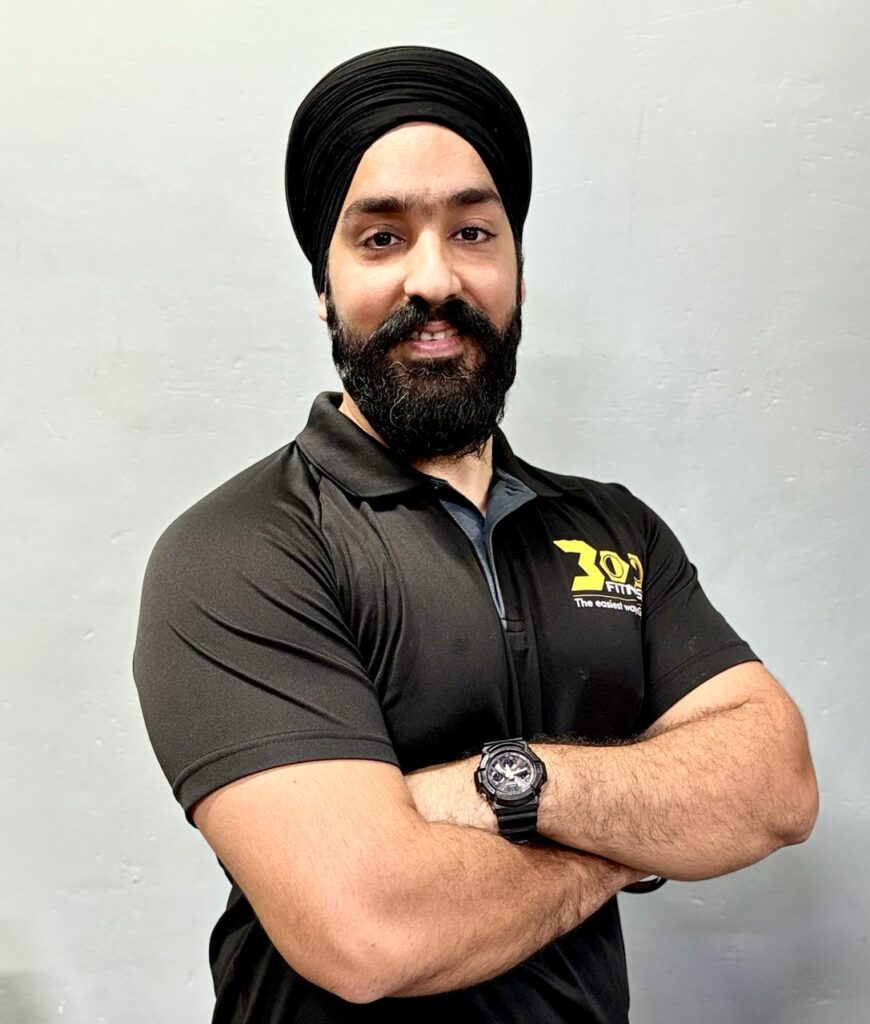
You probably do not need a personal trainer simply because you joined a gym.
You may need one when you are unsure how to train for your goal, struggle with exercise technique, keep repeating workouts without progressing, need more accountability, or want a structured program that adapts as your fitness improves.
That distinction matters.
Personal training in Gurgaon can be valuable for beginners, people working towards specific strength or fat loss goals, busy professionals who want more efficient sessions, and anyone who feels lost despite having access to a gym.
But personal training should solve a real problem. It should not become an expensive substitute for learning how to train.
At 300 Fitness, the broader philosophy is to make fitness easier to follow through structure, consistency and goal focused training. Personal training can be one part of that approach when individual coaching genuinely adds value.
When do you really need a personal trainer?
Personal training is most useful when you need individual help with exercise technique, workout structure, progression, accountability or a specific fitness goal. Beginners, people who have stopped progressing and members who repeatedly skip workouts may benefit from one to one coaching. If you already train safely, follow a suitable program and progress consistently, personal training may be optional rather than essential.
What Does a Personal Trainer Actually Do?
A personal trainer should do more than count repetitions and tell you to work harder.
Good personal training starts by understanding the person being trained.
That may include discussing:
- your primary fitness goal;
- previous training experience;
- current exercise habits;
- time available each week;
- exercises you are comfortable performing;
- movements that need more coaching;
- your ability to recover between sessions;
- how your progress will be measured.
From there, the trainer can help create an appropriate training structure and adjust it over time.
The American College of Sports Medicine states that a qualified personal trainer can help someone safely start and maintain an effective exercise program. ACSM also recommends carefully selecting a trainer whose qualifications and approach match your needs. You can read its official guidance on investing in a personal trainer.
A useful trainer should therefore help answer questions such as:
What should I train today?
How much should I do?
Is my technique appropriate?
When should this exercise become harder?
Do I need to change the program?
Am I actually progressing?
That is considerably more useful than simply having someone standing beside you during your workout.
Who Benefits Most From Personal Training?
Not everyone needs the same amount of coaching.
Some people can learn the basics, follow a structured program independently and remain consistent.
Others benefit significantly from having a fitness coach.
1. Complete Beginners
Walking into a gym for the first time can be confusing.
You may see dozens of machines, benches, cables, dumbbells and cardio stations without knowing where to begin.
A trainer can help a beginner understand:
- basic movement patterns;
- equipment setup;
- exercise order;
- appropriate starting resistance;
- rest periods;
- workout frequency;
- gradual progression.
The goal should not be to make you permanently dependent on the trainer.
A good coaching process should gradually help you understand your own workouts better.
2. People Who Keep Starting and Stopping
Some people know plenty about exercise.
Consistency is their problem.
They train intensely for ten days, disappear for three weeks and restart again.
Personal training can create a fixed commitment in the calendar.
That may be especially useful for professionals around Gurgaon who deal with changing office schedules, traffic and long working days.
If you live around Sector 49, Sohna Road, South City 2 or Uppal Southend, choosing both a convenient gym and a realistic training time may matter just as much as choosing the trainer.
Accountability works best when the routine itself is practical.
3. People Who Are Not Progressing
You may be training consistently but still repeating almost the same workout month after month.
Same exercises.
Same weights.
Same repetitions.
Same intensity.
At that point, effort may not be the issue. Programming may be.
The 300 Fitness Workout Analysis discusses the importance of finding an appropriate training balance and using structured progression rather than simply doing more exercise.
A personal trainer may help identify where your current routine has become too easy, poorly organised or unnecessarily difficult.
4. People With a Specific Performance Goal
General fitness can often be approached with a general program.
Specific goals usually need more specific decisions.
For example:
- building strength;
- improving muscular endurance;
- learning resistance training;
- improving fitness for a sport;
- preparing for a physical challenge;
- developing better movement confidence.
A trainer can organise exercises around that goal instead of giving you a random collection of workouts.
Personal Training for Beginners
Beginners often ask whether they should first join a gym alone and only hire a trainer later.
There is no universal answer.
If you are confident learning equipment, following instructions and asking floor trainers for help, you may be able to begin without dedicated personal training.
But personal training can be particularly useful if you:
- have never performed resistance training;
- feel nervous using gym equipment;
- are unsure about technique;
- do not know how to structure a workout;
- want someone to teach you rather than simply supervise you;
- keep postponing your first proper workout.
The first few weeks are often less about pushing yourself to the limit and more about learning how to train.
That foundation can make future workouts much easier.
Personal Training for Weight Loss Goals
A personal trainer can support a weight loss goal by helping structure exercise, build consistency and gradually progress training.
But a trainer cannot override the rest of your lifestyle.
Exercise is one part of weight management.
Nutrition, overall activity, sleep, recovery and long term adherence also matter.
Be cautious of anyone promising a guaranteed amount of weight loss within a fixed number of days.
A better approach is to ask:
- What will my training week look like?
- How will strength training fit into it?
- How will cardio be used?
- How will progress be monitored?
- How will the plan change if I become fitter?
The value of personal training here is not a magical fat burning workout.
It is having a structured training process instead of guessing what to do each day.
Personal Training for Strength Goals
Strength training becomes more productive when exercises progress in a planned way.
That progression may involve changes in:
- resistance;
- repetitions;
- sets;
- exercise difficulty;
- range of motion;
- tempo;
- training volume;
- rest periods.
This is where coaching can become useful.
A trainer can observe how you perform an exercise and decide whether adding more weight is actually the right next step.
Sometimes progression means increasing resistance.
Sometimes it means improving control first.
The objective is not to make every session harder than the previous one. It is to create enough challenge for improvement while still allowing appropriate recovery.
Not Sure Whether You Need Personal Training?
Visit 300 Fitness in Sector 49, Sohna Road and discuss your goal, current training experience and the level of coaching you actually need.
How Trainers Personalise Workout Progression
Personalisation does not mean inventing a completely different exercise for every person.
It means adjusting the program to the individual.
Two people may both perform squats, rows and presses, but their training may differ in:
- exercise variation;
- starting resistance;
- repetitions;
- total volume;
- session frequency;
- range of motion;
- rest time;
- progression speed.
A good trainer should also know when not to progress something.
If your technique deteriorates each time weight increases, repeatedly adding more weight is not intelligent progression.
Professional personal training certifications commonly cover assessment, program planning, program execution and safety. For example, the NSCA Certified Personal Trainer examination evaluates trainers across client consultation and assessment, program planning, program execution, and safety and emergency procedures.
That gives you a useful clue when evaluating a trainer: ask about the process, not just the workout.
Do You Need Personal Training for Every Gym Session?
Usually, no.
Many people use personal training for selected sessions while completing other workouts independently.
For example, someone may use coached sessions to:
- learn new movements;
- improve technique;
- progress major exercises;
- review the program;
- stay accountable.
They may then complete simpler workouts independently.
The right frequency depends on your experience and needs.
Personal training should ideally increase your confidence and understanding over time.
If you have been training with someone for months but still have no idea why you perform any exercise, ask more questions.
Personal Trainer vs Group Fitness: Which Is Better?
Neither is automatically better.
They solve different problems.
| Factor | Personal Training | Group Fitness |
| Attention | Individual | Shared across the group |
| Programming | Can be highly personalised | Usually follows a group format |
| Technique feedback | More opportunity for detailed correction | Depends on class size and format |
| Social environment | One to one | More social |
| Accountability | Direct trainer accountability | Group and instructor accountability |
| Best suited for | Specific goals, beginners, technique, progression | Variety, energy, community, guided activity |
If you enjoy group energy and mainly need a reason to stay active, classes may be enough.
If you need close technique coaching or a plan built around a specific goal, personal training may be more appropriate.
Some people use both.
Personal Training vs Training on Your Own
Self guided training can work very well if you:
- understand basic exercise technique;
- can build or follow an appropriate program;
- know how to progress it;
- train consistently;
- recognise when something needs to change;
- are comfortable asking for help when needed.
Personal training becomes more valuable when one or more of those pieces are missing.
The question is not:
“Is personal training better?”
The better question is:
“What problem would personal training solve for me?”
If you cannot identify a problem, you may not need it.
Do You Need a Personal Trainer? Quick Decision Guide
Personal Training May Be Worth Considering If…
Use these situations as a practical decision guide rather than assuming every gym member needs one to one coaching.
How to Choose a Personal Trainer in Gurgaon
Choosing the right personal trainer in Gurgaon is more important than simply finding someone available at your preferred time.
Use a proper checklist.
Check Their Credentials
Ask about:
- personal training certification;
- education relevant to fitness or exercise;
- CPR or emergency training where applicable;
- experience working with people similar to you.
ACSM identifies personal trainer education and certification as an important part of selecting an appropriate fitness professional. Its Certified Personal Trainer pathway also includes requirements related to age, education and CPR/AED credentials.
Ask About Their Training Process
Instead of asking:
“Can you help me lose weight?”
Ask:
“How would you structure my first month?”
A thoughtful trainer should be able to explain the process without promising unrealistic results.
Discuss How Progress Is Measured
The method depends on your goal.
Progress may involve:
- exercise technique;
- training consistency;
- strength;
- endurance;
- workout volume;
- body measurements;
- fitness assessments.
There should be some way of deciding whether the program is working.
Make Sure Communication Works
A trainer can be knowledgeable and still be a poor match for you.
You should feel comfortable asking:
- Why are we doing this exercise?
- Can you explain that again?
- Why did you change the program?
- Should this movement feel like this?
Good coaching includes communication.
Avoid Guaranteed Transformation Claims
No trainer can guarantee a precise body transformation for every individual.
Progress depends on many variables, including training consistency, nutrition, activity, recovery and the person’s starting point.
Look for a process, not a promise.
How Many Personal Training Sessions Does a Beginner Need?
There is no fixed number.
A beginner who learns quickly and has a simple goal may need fewer coached sessions.
Someone who wants more accountability or needs extensive technique guidance may want ongoing support.
Think in stages instead:
Stage 1: Learn the environment and main exercises.
Stage 2: Understand your workout plan.
Stage 3: Learn how progression works.
Stage 4: Complete more training independently.
Stage 5: Use the trainer for reviews, technique or program changes when useful.
This approach keeps the purpose of personal training clear.
How Personal Training Fits the 300 Minutes Per Week Philosophy
A trainer should not make fitness dependent on the one or two hours you spend together.
The bigger objective is building an active week.
The World Health Organization’s India guidance states that adults aged 18 to 64 should generally complete 150 to 300 minutes of moderate intensity aerobic activity each week, alongside regular muscle strengthening activity.
Read the official WHO India physical activity guidance.
This fits naturally with the #300MinutesPerWeek thinking at 300 Fitness.
The trainer’s job can be to help make those minutes more structured.
For example, your week might include:
- two personal training sessions;
- one self guided strength workout;
- one cardio or conditioning session;
- another form of activity you enjoy.
The exact combination will vary.
What matters is developing a routine that can survive beyond the initial burst of motivation.
Personal Training in Sector 49 Gurgaon: Why Convenience Still Matters
Finding an excellent trainer is not enough if the training arrangement is difficult to maintain.
For someone living or working around Sector 49, Sohna Road, South City 2 or Uppal Southend, consider:
- travel time;
- your preferred training slot;
- work schedule;
- Gurgaon traffic;
- how often you plan to train;
- whether you can realistically maintain the appointment.
The best coaching arrangement is one you can actually follow.
A trainer 45 minutes out of your normal route may look perfect online but become difficult to sustain after a few weeks.
Location is part of the program.
When You Probably Do Not Need Personal Training
Personal training may not be necessary if:
- you already understand your exercises;
- you follow a structured program;
- you progress consistently;
- you train safely;
- you remain accountable without appointments;
- you know when to ask a trainer for occasional help.
There is nothing wrong with training independently.
The point of fitness is not to collect services.
It is to build a routine that works.
If your current approach already produces that, continue using it.
Is Personal Training at 300 Fitness Right for You?
300 Fitness is based in Sector 49 on Sohna Road, Gurgaon.
The brand’s broader approach focuses on making fitness easier to follow through structured training, personalised workout planning, coaching and consistent weekly activity.
Personal training may fit that approach if you want more individual attention than a normal gym routine gives you.
Before deciding, think about the problem you want coaching to solve.
Do you need technique help?
Do you need structure?
Do you need progression?
Do you need accountability?
Do you have a specific fitness objective?
If the answer to several of these is yes, speaking with a trainer may be useful.
If you already have those areas under control, you may simply need a good gym environment and a program you can follow consistently.
You can read more about the 300 Fitness approach before deciding.
Find the Right Level of Coaching for Your Goal
Visit 300 Fitness at Sector 49, Sohna Road and discuss whether personal training, structured gym training or a combination of both makes the most sense for you.
Schedule a VisitFrequently Asked Questions
Is personal training worth it in Gurgaon?
Personal training can be worth it if you need individual help with exercise technique, workout structure, progression, accountability or a specific fitness goal. If you already train confidently and follow an effective program consistently, dedicated personal training may be optional.
How many personal training sessions do beginners need?
There is no fixed number. Some beginners need only enough sessions to learn basic exercises and understand their program, while others benefit from longer term accountability and coaching. The number should depend on your experience, confidence and goal rather than a universal package size.
Can a personal trainer help with weight loss?
A personal trainer can help structure exercise, improve consistency, plan progression and provide accountability during a weight loss effort. Weight management also depends on nutrition, overall activity and other lifestyle factors, so personal training should not be treated as a guaranteed weight loss solution.
What should I ask a personal trainer before starting?
Ask about qualifications, experience, how the trainer assesses new clients, how your program will be created, how progress will be measured, how often the program changes and what happens when you train independently.
Is personal training better than group fitness classes?
Neither is universally better. Personal training provides more individual attention and customisation, while group fitness provides instructor led exercise in a social setting. Personal training may suit specific goals or technique needs, while group fitness may suit people who enjoy variety and community.
Do I need a personal trainer if I am new to the gym?
Not necessarily, but a beginner may benefit from personal training if they are unsure how to use equipment, perform exercises safely or organise a workout. The aim should be to build knowledge and confidence rather than create permanent dependence on a trainer.
Can I use a personal trainer only for some workouts?
Yes. Some people use personal training for selected sessions to learn technique, progress major exercises or review their program, while completing other workouts independently.
How do I choose a personal trainer in Gurgaon?
Look at the trainer’s relevant qualifications, experience, communication style and training process. Ask how they assess clients, build programs, measure progress and adapt training. Avoid choosing only on appearance, social media popularity or transformation promises.
Is one to one personal training better for strength training?
One to one coaching can be useful for strength training when you need close feedback on technique, exercise selection and progression. It is not compulsory if you already understand the movements and can follow an appropriate strength program independently.
Where can I enquire about personal training in Sector 49 Gurgaon?
300 Fitness is located in Sector 49 on Sohna Road, Gurgaon. You can contact the team through the official 300 Fitness contact page to discuss your fitness goal and the level of training support you may need.